MessageMedia struggled with a complex, manual Excel budgeting process that was bogged down by massive customer datasets, multi-currency nuances, and disconnected spreadsheets. Partnering with QMetrix, they implemented Workday Adaptive Planning to launch a unified, live forecasting model that halves their planning cycle while empowering the team with real-time, granular reporting.

MessageMedia Group provides easy and engaging global messaging solutions, helping businesses deliver exceptional communication with their customers. They are a market leader in Australia and New Zealand, and also have offices in San Francisco, London and Ho Chi Minh.

The complication of managing massive datasets and disconnected spreadsheets
MessageMedia has over 65,000 business customers. Customers are categorised according to 4 regions which each have 5 segments.
Every year they produce an individual budget for about a thousand of their customers, and the remainder in segments.
Budgeting was done in Excel with only 2 people running the entire budget process with input from 15 regional sales managers.
There were a lot of datasets and spreadsheets. It became very cumbersome and difficult to consolidate. It was also hard to update and inflexible.
MessageMedia wanted to look for a solution that could:
- House large amounts of data
- Consolidate current Excel files
- Update quickly and budget within a shorter timeframe
- Facilitate a rolling forecast
A solution with granular planning and a unified platform
After a demonstration and proposal by QMetrix, MessageMedia chose Workday Adaptive Planning.
The focus of the project was to create a budget, which would inherently have a rolling forecast – something too difficult to achieve with Excel.
It involved creating 4 models: Sales, Payroll, New Business, and Profit and Loss.
The project started in January with the goal to implement and have draft forecasts before April.
MessageMedia could then have the actual budget completed and signed off before June.

Untangling a web of complex acquisition brands and local currencies
A part of MessageMedia’s growth strategy has been through acquisitions. While the company has their own products, each acquired business retains their original product.
This means customers can come from different acquisitions or brands, with products that have varying costs and complexities.
Previously, the sales model spreadsheets were set up with each brand as a legal entity. However, MessageMedia requires reporting by brand, region and cohort (the year in which the customer was signed) – often to a very granular level.
It sounds complex, but the powerful multi-dimensional capability of Workday Adaptive Planning simplified it.
The model was designed in a way that allowed MessageMedia to plan at the granularity they required, but also analyse and sift through information quickly to focus on a particular area and drill down into it as needed.
MessageMedia’s business is predicated on volume – for example, the volume of messages that are sent. Whilst volume is a statistic and is non-financial, it is a key underlying driver and metric that was successfully incorporated into the sales model.
Taking it one step further, volume is also heavily influenced by the type of day and seasonality. Working days tend to be busier than public holidays and weekends. This was incorporated into the sales model to improve the accuracy of the budget and forecasts.
While it was possible to do this in Excel before, it can now be done much more quickly and accurately within Workday Adaptive Planning, significantly reducing the planning cycle time.
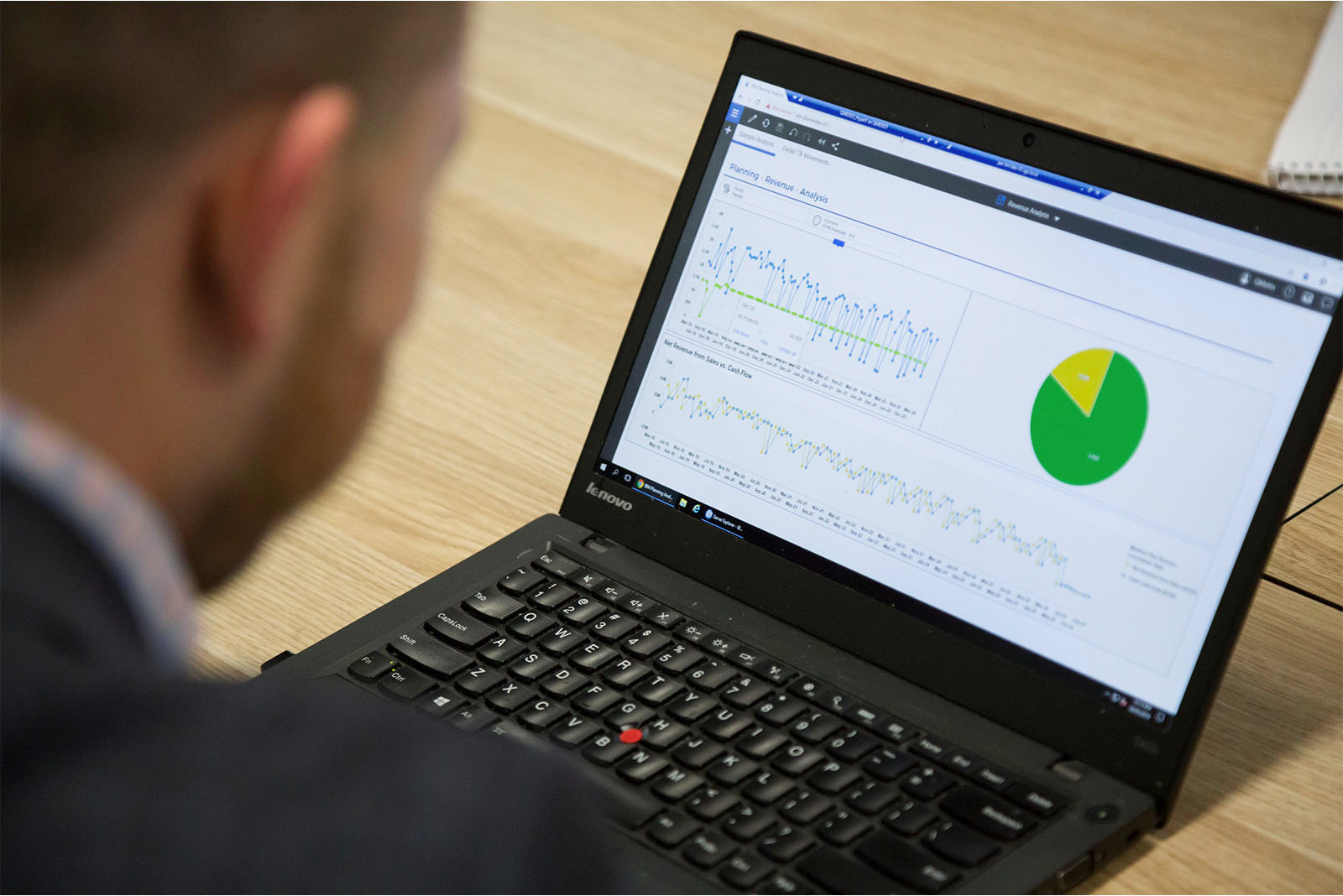
Moving to a live environment for payroll and profit and loss modelling
As part of the budget, a payroll model was built in Workday Adaptive Planning as well.
The model has made it easier to reconcile, update, report and forecast headcount within teams. It can also account for nuances and tailor the cost of Human Resource requirements per country – such as people in Australia requiring superannuation.
The model is very much “live”. Rather than taking notes at meetings, going away to adjust in Excel and sending a report, the meeting plans can be updated on the spot, thereby improving collaboration and efficiency.
Adaptive Planning refreshes the data automatically, and everyone can see the financial impact of the changes straight away. It gives flexibility and allows for quicker decision making.
With the new Profit and Loss model, MessageMedia are able to make changes in Workday Adaptive Planning which then flow into the overall Profit and Loss – something they could not do before as the models were very much disconnected from one another.
Easy translation for multi-currency
MessageMedia operates in 4 countries, each with their own currency. This added another layer of complexity within the planning process that was difficult to manage in Excel.
In fact, exchange rate impacts could only be reviewed upon consolidation of all the spreadsheet files, which made what-if scenarios on exchanges rates impossible to do.
However, in Workday Adaptive Planning, exchange rates are put into assumption sheets which do the translation on the spot; it takes just one click to see the results.
Regional sales managers can budget and plan in their local currency, and the finance team can easily translate this to Australian dollars when reporting.

Halving the planning cycle and shifting ownership back to the finance team
With Workday Adaptive Planning, the new budget cycle’s reporting has been much more extensive – plus the numbers are more accurate, reliable and can be trusted by the business.
With OfficeConnect, a Workday Adaptive Planning add-on for Microsoft Office, MessageMedia can update things so quickly that Ross says it has “changed the game”.
Instead of complex spreadsheets that only people with intimate knowledge could use, things have been simplified so other finance team members can manage the budget. It has made business partnering easier and being able to share ownership has been a big plus to drive accountability.
Working with QMetrix from implementation to go-live
Ross Kerr, Senior Management Accountant at MessageMedia who managed the Workday Adaptive Planning project, shared his experience:
“From our initial discovery session, QMetrix were really helpful. They saw how nuanced our budget structure was and provided guidance to set up level structures and manage brands in a way that was spot on. If we were to do it again, I would do it exactly the same way.
“Implementation was superb. The QMetrix team was incredibly patient, very responsive and had an answer for everything. At the last minute, I added another requirement, but they rolled it out in time and it worked perfectly.
“We scheduled training where I was able to ask their consultant questions all day. It put me in a strong position to manage Workday Adaptive Planning without having to call them for help all the time. This was a key success criteria for us, as we wanted a solution that we could own and self-manage.”

“Our experience with QMetrix has been nothing but positive. They made me look good!”
– Ross Kerr, Senior Management Accountant
Impact for MessageMedia

Accelerate your FP&A with Workday Adaptive Planning
Workday Adaptive Planning helps finance teams with better Financial Planning and Analysis. Explore how it can solve your budgeting, forecasting, planning and reporting challenges.