TasWater’s budgeting process involved over 50 cost centre managers and took up to 6 months. To change this, they adopted Workday Adaptive Planning and now have a shorter budget cycle, using an intuitive system that has been quickly adopted by both finance and business users. Read about the changes and benefits here.

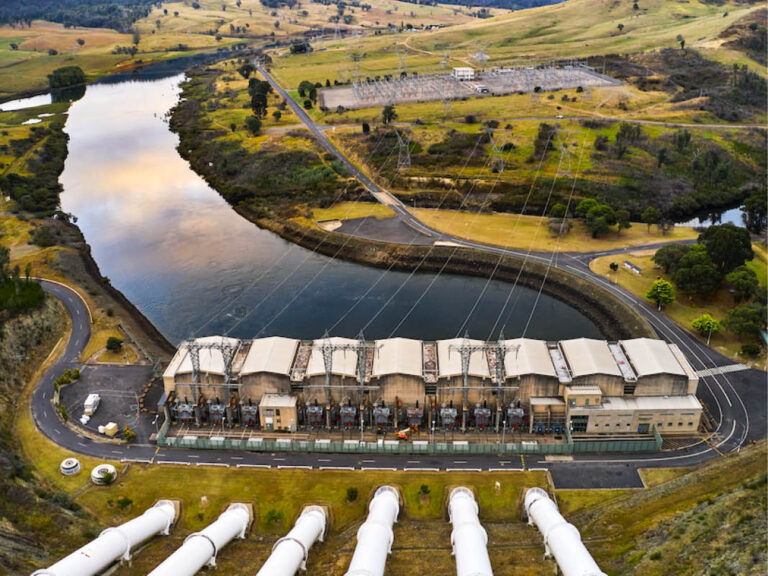
TasWater is the main water and sewerage authority in Tasmania, owned by 29 local councils and the state government. It is accountable to those shareholders and is responsible for providing essential services to many Tasmanians. Their responsibilities include sourcing and treating the water, metering and maintaining the infrastructure, collecting and treating sewage, and returning water safely to the environment.

The challenge of manual and long budget cycles
Before engaging QMetrix, TasWater relied on a manual spreadsheet-based budgeting process. Their finance department prepared individual input templates and emailed them to over 50 cost centre managers across the business. Each of these needed to be emailed back (or followed up) before the finance team collated the information into a consolidated master spreadsheet.
The finance team often went through several iterations of this process because consolidated numbers were required to go to the board. The board would then review it, seek further information or make adjustments before the final budgets were signed off.
The entire process would take upwards of four to six months to completely finalise. Variations of this process were also required for re-forecasting and long-range planning over multiple years. They needed to change this and have:
- Faster budget cycle completion times
- More accountability from their cost centre managers as to how the budget numbers were derived and what drivers and assumptions were used. On this basis, managers would not only be accountable, but would also take ownership of the numbers they approved
- A technology solution which was easy to use and powerful, yet could be owned and managed by the finance team

Adopting a cloud-based system as both a finance and business tool
A cloud-based system that is easy to adopt
TasWater knew they had a problem and wanted to better understand the solutions available to them. They chose QMetrix for its deep budgeting and forecasting understanding, and expertise in scoping, designing and implementing the right solution to solve the challenges at hand.
After initial discussions, QMetrix recommended Workday Adaptive Planning, a market leading cloud-based Corporate Performance Management (CPM) tool which is very ‘finance friendly’ in terms of how it can be deployed and administered across the organisation.
While easy to use, it has the right controls and mechanisms at the back end to ensure that the planning process is efficient and effective, and that the underlying numbers are accurate.
Both a finance and business tool
QMetrix undertook various workshops with TasWater’s finance team as well as the wider business to build mutual understanding for the project. It was important for all stakeholders to understand there was technology that could be easily adopted and managed to help improve the process by reducing the amount of double handling and time required to perform budgeting tasks, as well as encourage greater accountability and ownership from managers.
Through these workshops, QMetrix defined basic driver-based planning methodologies to underpin TasWater’s revenues and expenses, and designed the models to ensure cost centre managers could easily interact with the application.
The process was significantly enhanced by incorporating the use of commentary and explanations to better record and communicate how cost centre managers devised their numbers.

Implementation phases
Phase 1: 2 months – Phase 1 included all analysis, scoping, development, change management and training activities required to deploy the technology across 50 users. The delivery of the foundation profit and loss model was completed on time and within budget.
Phase 2: 2 months – Phase 2 incorporated a 3-way profit and loss, balance sheet and cashflow model as well as expanding the capability to undertake forecasting and long-range planning. Phase 2 substantially enhanced the foundation profit and loss model delivered in the first phase and was also completed on time and within budget.
By completing a more ‘driver-based’ budgeting model, TasWater can better understand the numbers behind their budget and focus on what those numbers mean for them as a business. This approach substantially enhances their variance reporting capability as they can more easily understand variations between budgets and actuals once the budget year has commenced.

“Workday Adaptive Planning is fast and easy to use. It has the same look and feel of Excel, without the usual pain points associated with Excel. The teams are more engaged in the budgeting process, which is a significant win.”
– TasWater
Impact for TasWater

Overcome Public Sector challenges
QMetrix partners with Government and Public Sector organisations to optimise financial planning, streamline cost management, and ensure data clarity. This empowers you to drive performance and maximise value without the administrative burden.
Speed up your budget cycle with Workday Adaptive Planning
Workday Adaptive Planning helps finance teams with better Financial Planning and Analysis. Explore how it can solve your budgeting, forecasting, planning and reporting challenges.